 English
 中文
 Русский
 Deutsch
 Français
 日本語
 Indonesia
 Tiếng Việt
 ไทย
 العربية

Silent-Diesel- vs. offene Benzingeneratoren: Schallpegel und 3-Jahres-TCO-Vergleich
An WeChat Moments teilen
Executive Summary: Acoustic Comfort vs. Capital Cost
When specifying power equipment for commercial offices, urban construction sites, private medical clinics, and residential hospitality complexes, noise level is frequently the deciding factor for municipal permitting and client comfort. While open-frame portable gasoline generators remain the cheapest entry point for raw kilowatt capacity, their high acoustic emissions—often exceeding 80 dB(A)—can cause immediate noise complaints, occupational hearing hazards, and local code violations.
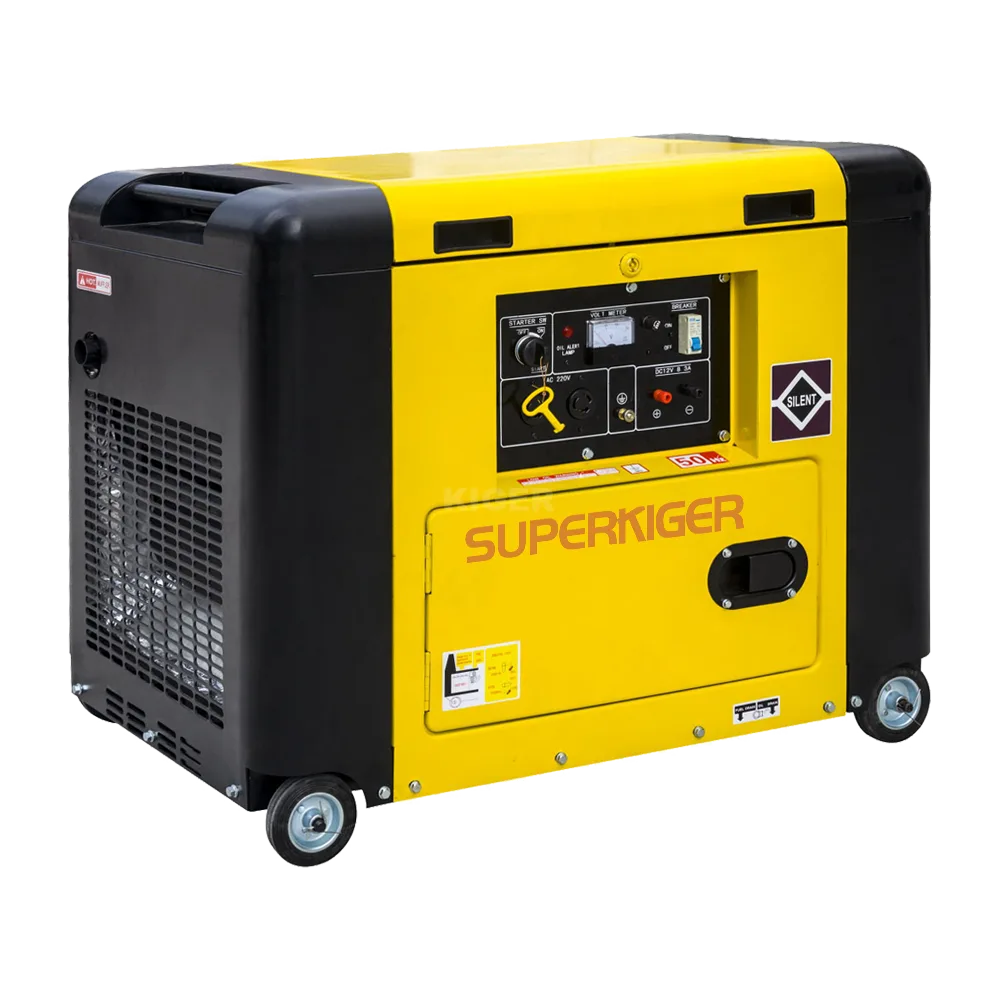
Conversely, soundproof silent diesel generator sets incorporate heavy-gauge acoustic enclosures, rock wool sound attenuation, and residential-grade silencers to suppress operational noise to 68–72 dB(A) at 7 meters, while delivering 5x longer engine operating lifespans and 35% lower fuel consumption.
This 2026 technical guide provides facilities engineers, project procurement managers, and commercial operators with an objective comparison of acoustic engineering, vibration dampening, and 3-year Total Cost of Ownership (TCO).
1. Acoustic Decibel Comparison: The Physics of Perceived Noise
The decibel scale (dB) is logarithmic, not linear. An increase of 3 dB represents a doubling of acoustic sound energy, while an increase of 10 dB represents a doubling of perceived loudness to the human ear.
| Operating Environment | Sound Pressure Level at 7m | Perceived Noise Perception | Permitted Exposure Duration (OSHA) |
|---|---|---|---|
| Quiet Office / Library | 45 – 50 dB(A) | Quiet, non-intrusive | Unlimited |
| SUPERKIGER Silent Diesel (KG5000DE) | 68 – 70 dB(A) | Normal conversational speech | Continuous (No protection needed) |
| SUPERKIGER Silent Diesel (KG10000DE) | 70 – 72 dB(A) | Commercial background noise | Continuous (Permitted in business zones) |
| Commercial Vacuum Cleaner | 75 dB(A) | Moderate, intrusive | Continuous |
| Standard Open-Frame Gasoline (KG2500) | 78 – 80 dB(A) | Loud street traffic | 8 Hours |
| Large Open-Frame Gasoline (KG13000E) | 82 – 84 dB(A) | Lawn mower / Power drill | Approaching threshold for hearing PPE |
Operating an 82 dB(A) open-frame generator next to a boutique hotel, dental clinic, or residential patio is virtually unacceptable. Specifying a 68 dB(A) silent canopy unit cuts perceived acoustic loudness by more than 50%, enabling seamless compliance with municipal environmental noise standards.
2. Acoustic Canopy Engineering: How Silent Diesel Sets Work
Achieving sub-70 dB(A) sound attenuation requires integrated multi-stage acoustic design:
- Labyrinth Airflow Ducting: Sound travels in line-of-sight. High-performance canopies feature internal S-curve labyrinth air intake and exhaust chambers that force sound waves to bounce multiple times against acoustic absorption material before exiting.
- High-Density Acoustic Insulation: Internal walls are lined with 30mm to 50mm non-flammable acoustic rock wool or closed-cell polyurethane foam protected by perforated galvanized steel sheet.
- Dual-Canister Residential Exhaust Silencers: Standard open-frame generators feature basic expansion chamber mufflers. Silent diesel generators integrate heavy multi-chamber expansion silencers providing 25–35 dB(A) exhaust noise reduction.
- Heavy Dual-Elastomeric Vibration Isolators: Isolates engine and alternator mechanical shaking from the outer metal shell, preventing the canopy itself from acting as a giant acoustic resonator.
3. Total Cost of Ownership (TCO): 3-Year Commercial Analysis
Scenario Baseline
- Application: Commercial Backup for Medical Clinic / Small Hotel
- Required Output: 8 kW Continuous Load
- Usage Profile: 400 Operating Hours/Year (1,200 Hours over 3 Years)
- Comparison: SUPERKIGER KG10000DE (8 kW Silent Diesel) vs. SUPERKIGER KG13000E (8 kW Open-Frame Gasoline)
| Cost Component | 8 kW Silent Diesel (KG10000DE) | 8 kW Open Gasoline (KG13000E) | Difference |
|---|---|---|---|
| Initial Purchase Price (CAPEX) | $1,450.00 | $780.00 | +$670.00 (Diesel premium) |
| Acoustic Noise Level at 7m | 70 dB(A) (Quiet) | 82 dB(A) (Loud) | -12 dB(A) quieter |
| Hourly Fuel Consumption | 1.95 L/hr | 3.20 L/hr | -1.25 L/hr (Diesel saves 39%) |
| Total Fuel (1,200 Hours) | 2,340 Liters | 3,840 Liters | -1,500 Liters saved |
| Fuel Cost (@ $1.15/L Average) | $2,691.00 | $4,416.00 | -$1,725.00 fuel savings |
| Routine Maintenance & Oil | $260.00 (5 service intervals) | $540.00 (12 service intervals) | -$280.00 maintenance savings |
| Residual Asset Resale Value | -$650.00 | -$180.00 | -$470.00 higher resale |
| NET 3-YEAR COMMERCIAL TCO | $3,751.00 | $5,556.00 | -$1,805.00 (32.5% Lower TCO) |
4. Application Selection Matrix: When Canopy is Mandatory
Select Silent Diesel Generators When:
- Urban & Sub-urban Commercial Facilities: Hotels, restaurants, retail complexes, and dental clinics where customer experience and local noise ordinances prohibit loud engine noise.
- Residential Backup Installations: Home estates and multi-family complexes where generators operate close to property lines and bedroom windows.
- Telecommunications Base Stations: Mobile network towers situated in residential neighborhoods requiring autonomous, low-noise nighttime cycling.
- Extended Running Hours (> 300 hrs/yr): The massive fuel savings of direct-injection diesel rapidly repays the initial canopy investment.
Select Open-Frame Gasoline Generators When:
- Isolated Construction & Agricultural Sites: Remote civil infrastructure where acoustic levels are unrestricted and capital expenditure must be minimized.
- Mobile Trade Contractors: Where equipment must be manually lifted onto utility trucks daily and weight is the overriding constraint (45–80 kg vs 160+ kg).
- Emergency Cold-Weather Units: Standby generators stored in unheated sheds in sub-zero climates without auxiliary mains power.
Comprehensive Analysis: For extended 3-year commercial fuel economy models across prime and standby duty cycles, explore our in-depth guide: Diesel vs. Gasoline Generators for Commercial Backup: The Complete 2026 Buying Guide.
For OEM soundproof canopy specifications or acoustic test reports: [email protected] | SUPERKIGER Product Catalog
Häufig gestellte Fragen
Wie viel leiser ist ein gekapselter Silent-Dieselgenerator im Vergleich zu einem offenen Benzingenerator in 7 m Entfernung?
Ein schallgedämmter SUPERKIGER Silent-Dieselgenerator (z. B. KG5000DE oder KG10000DE) erreicht durch sein pulverbeschichtetes Akustikgehäuse und den Zweikammer-Schalldämpfer 68–72 dB(A) in 7 Metern Entfernung. Ein offener Rahmen-Stromerzeuger gleicher Leistung liegt bei 78–83 dB(A). Da die Dezibel-Skala logarithmisch ist, entspricht eine Reduktion um 10 dB einer Halbierung der wahrgenommenen Lautstärke (ca. 50% leiser).
Ab wie vielen Betriebsstunden amortisiert sich der höhere Anschaffungspreis eines Dieselgenerators?
Der TCO-Break-Even-Punkt liegt bei etwa 400 bis 550 Betriebsstunden pro Jahr. Ein Direkteinspritzer-Dieselmotor verbraucht rund 280 g/kW·h gegenüber 395 g/kW·h bei einem 4-Takt-OHV-Benzinmotor (ca. 40% weniger Liter pro Stunde). Bei gewerblicher Nutzung von 4–6 Stunden täglich amortisiert sich der Mehrpreis allein über die Kraftstoffersparnis innerhalb von 8 bis 11 Monaten.
Ist für seltenen Haus-Notstrom ein Benzin- oder ein Silent-Dieselgenerator sinnvoller?
Bei weniger als 100–150 Betriebsstunden pro Jahr für reine Notfälle ist ein offener Benzingenerator (z. B. KG3500 oder KG6500E) aufgrund der geringeren Anschaffungskosten wirtschaftlicher. Ab 300–500 Stunden Jahreslaufzeit sowie in lärmsensiblen Wohngebieten, Kliniken oder Baustellen ist der Silent-Dieselgenerator klar im Vorteil.
Wie unterscheidet sich die Lebensdauer zwischen Diesel- und Benzin-Stromerzeugern?
Luftgekühlte Direkteinspritzer-Dieselgeneratoren erreichen bei regelmäßiger Wartung (SAE 15W-40) 3.000 bis 5.000+ Betriebsstunden bis zur Generalüberholung, während klassische Open-Frame-Benzingeneratoren auf etwa 1.000 bis 1.500 Betriebsstunden ausgelegt sind.