 English
 中文
 Русский
 Deutsch
 Français
 日本語
 Indonesia
 Tiếng Việt
 ไทย
 العربية

中国製発電機の工場調達・工場監査ガイド:100%負荷試験基準と40HQコンテナ混載最適化
WeChat Momentsにシェア
Executive Summary: Avoiding Costly Pitfalls in Chinese Power Sourcing
China manufactures over 70% of the world’s portable and commercial power generation equipment. For international equipment distributors, hardware retail chains, and commercial contractors, sourcing directly from Chinese manufacturing hubs offers unmatched economies of scale, flexible OEM branding, and cutting-edge soundproofing technology.
However, the Chinese power equipment export landscape is heavily fragmented. Importers frequently face significant risks: dealing with trading middlemen misrepresenting themselves as factories, receiving generators with inferior copper-clad aluminum (CCA) windings, encountering non-compliant emissions documentation that fails destination customs, and suffering high shipping costs from poorly packed containers.
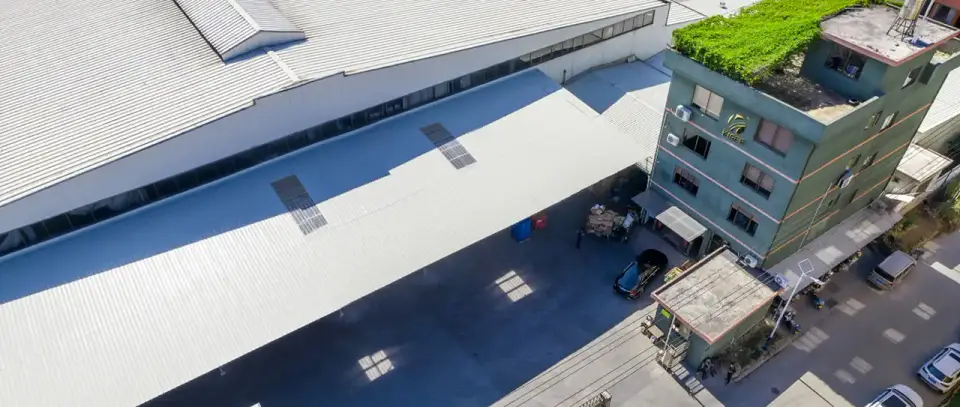
This 2026 factory sourcing guide delivers a proven engineering and procurement checklist for international buyers sourcing diesel generators, gasoline sets, and water pumps from Ningde, Fujian—China’s premier power machinery export base.
1. The Ningde Power Cluster: Industrial Ecosystem Advantages
Located along the coast of Fujian Province, Ningde is internationally recognized alongside Taizhou (Zhejiang) and Chongqing as one of China’s core electrical and power machinery manufacturing powerhouses:
- Complete Upstream Supply Chain: Within a 30-kilometer radius, Ningde houses specialized Tier-1 component suppliers for engine blocks, high-precision forged crankshafts, silicon steel laminations, and digital AVR microchips.
- Port Logistics Proximity: Ningde’s deepwater coastal ports, combined with short feeder connections to Xiamen and Fuzhou container terminals, significantly reduce domestic trucking inland freight compared to inland provinces.
- Advanced Acoustic Canopy Manufacturing: Ningde has pioneered automated laser sheet-metal cutting and electrostatic outdoor powder-coating technology for silent diesel generator enclosures, setting the benchmark for weather-resistant acoustic canopies exported to tropical Africa and the Middle East.
2. Factory Audit Checklist: True Manufacturer vs. Assembly Middleman
Before remitting 30% production deposits, foreign buyers should insist on verifying physical manufacturing capabilities against this 5-point audit criteria:
| Audit Dimension | True OEM Manufacturer (e.g., SUPERKIGER 12,000m² Plant) | Assembly Workshop / Trading Middleman |
|---|---|---|
| Motor Winding Operations | In-house automated stator coil winding & VPI vacuum varnishing | Purchases pre-wound generic stators from external wholesale markets |
| Metalworking & Canopies | In-house CNC laser cutting, automated folding & powder-coating lines | Buys pre-painted sheet metal shells, prone to rust and poor fitment |
| Quality Control Testing | 100% computerized resistive load-bank testing line with digital reports | Spot checks 5%–10% of units without calibrated load banks |
| Regulatory Documentation | Direct holder of original CE, ISO 9001, and SONCAP Product Certificates | Uses third-party borrowed certificates or Photoshop-altered test reports |
| Traceability & Serial Tracking | Laser-engraved serial badges tracked in ERP database from assembly to ship | Stick-on paper serial numbers with no historical production traceability |
3. 100% Load-Bank Testing Protocol: Verifying Nameplate Power
Commercial-grade generators should never be approved for crating based merely on “idling tests” (running the engine with no electrical load). A true factory quality inspection requires computerized resistive load-bank testing:
+-----------------------------------------------------------------------------------+
| Factory Automated Load-Bank Testing Sequence (Standard 45-Minute Protocol)        |
+-----------------------------------------------------------------------------------+
| Stage 1: Cold Startup & Idle Run-in (0% Load)  - 5 Minutes (Check oil pressure & leaks)
| Stage 2: Low-Load Stabilization (25% Load)    - 5 Minutes (Verify initial voltage & Hz)
| Stage 3: Half-Load Continuous Run (50% Load)  - 10 Minutes (Thermal stabilization)
| Stage 4: Rated Prime Output (100% Load)        - 20 Minutes (Verify kW output & AVR stability)
| Stage 5: Peak Overload Surge (110% Load)       - 5 Minutes (Confirm governor response & reserve)
+-----------------------------------------------------------------------------------+
Essential Parameters Verified on Test Reports:
- Voltage Stability: Must remain within ±1.5% to ±2.5% of rated voltage from 0% to 100% load.
- Frequency Regulation: Must maintain 50 Hz ± 0.5 Hz (or 60 Hz ± 0.6 Hz) under steady-state operation.
- Low-Oil Automatic Shutdown: Sensor must reliably ground the ignition circuit within 3 seconds of oil level depletion.
4. 40HQ Container Mixing Strategy: Slashing Per-Unit Ocean Freight
Ocean freight for a 40-foot High Cube (40HQ) container represents a significant percentage of landed unit cost. Maximizing container space is the fastest way to increase retail profit margins:
- The Freight Dilemma: A 40HQ container provides approximately 68 to 76 cubic meters of usable volume and a maximum road cargo weight limit of 21,000 to 26,000 kg (depending on destination country axle laws).
- The Heavy-Light Mixing Solution:
- Silent diesel generators (such as the KG5000DE series, weighing ~150 kg each) are dense and reach the container weight limit when the container is only 60% full.
- Portable gasoline generators (such as 2kW–3kW models, weighing ~40 kg each) or gasoline water pumps are compact and fill volume without exceeding weight limits.
- The Optimal 40HQ Load: Position 54 to 72 heavy silent diesel sets on the lower deck, and stack 200 to 350 lightweight gasoline units or water pumps on the upper tier. This maximizes both the gross payload weight and total cubic volume, cutting landed shipping costs by up to 22% per kilowatt.
5. Customs Clearance Documentation Checklist
Ensure your supplier provides authentic, verified documents to avoid port detention:
- Clean on Board Bill of Lading (B/L): Must clearly specify container seal numbers and exact gross weights.
- Commercial Invoice & Detailed Packing List: Displaying exact engine serial numbers, net weights, and HS codes (e.g., 8502.20 for gasoline sets, 8502.11 for small diesel sets).
- CE Declaration of Conformity (DoC): Referencing Machinery Directive 2006/42/EC and EMC Directive 2014/30/EU.
- Country-Specific Compliance Certificates: SONCAP (PC/SC) for Nigeria, SASO for Saudi Arabia, or COC inspection certificates for East Africa.
Acoustic & Efficiency Reference: For decibel attenuation comparisons and fuel efficiency data across canopy models, see our Silent Diesel vs. Open-Frame Gasoline Generators Comparison.
To schedule an on-site factory visit, arrange a live video load test, or request 40HQ container loading calculations: [email protected] | SUPERKIGER Product Catalog
よくある質問
中国の自社一貫製造メーカーと単なる組立工房(商社)の見分け方は?
真の一貫製造メーカー(SUPERKIGERの寧徳12,000㎡工場など)は、100%純銅ステータ・ロータの自社巻線ライン、ロボットフレーム溶接、防音キャノピー用レーザー板金加工、静電粉体塗装ライン、およびコンピュータ制御の負荷試験室(ロードバンク)を保有しています。組立工房は外部から安価な部品を買い集めて手作業で組むだけで、校正された負荷試験設備を持ちません。
100%ロードバンク(負荷試験)では具体的にどの電気パラメータを記録すべきですか?
試験報告書には以下の5項目が必須です:①0%・50%・75%・100%および110%過負荷時の電圧安定度、②AVR制御下の周波数変動(50Hz/60Hz ±0.5Hz以内)、③全高調波歪率(THD)、④急激な負荷投入・遮断時の過渡電圧降下と回復時間、⑤低油圧・低油面アラートによる自動停止動作。
40HQコンテナに重量級の防音ディーゼル機と軽量のガソリン機を混載すると海上運賃が下がる理由は?
海上コンテナ運賃は1本単位で課金され、容積上限(40HQで約68〜76m³)と重量上限(通常21〜26トン)の両方の制約を受けます。重い防音ディーゼル発電機だけでは容積が余り、軽いガソリン発電機や水ポンプだけでは重量枠が余ります。下段にディーゼル機、上段に軽量なガソリン機や水ポンプを科学的に混載(スタッフィング)することで、kWあたりの輸送コストを最小化できます。
残金決済前に推奨される船積み前検査(PSI)の方法は?
SGS、Bureau Veritas、TÜV、Cotecnaなどの第三者検査機関によるAQL 1.5/4.0抜取検査を手配するか、コンテナバンニング前に工場のロードバンク試験ベンチと銘板・梱包状態をリアルタイムHDビデオ通話で監査する方法を推奨します。