 English
 中文
中文 Русский
 Deutsch
 Français
 日本語
日本語 Indonesia
 Tiếng Việt
 ไทย
ไทย العربية
Gasoline Water Pumps – A Guide
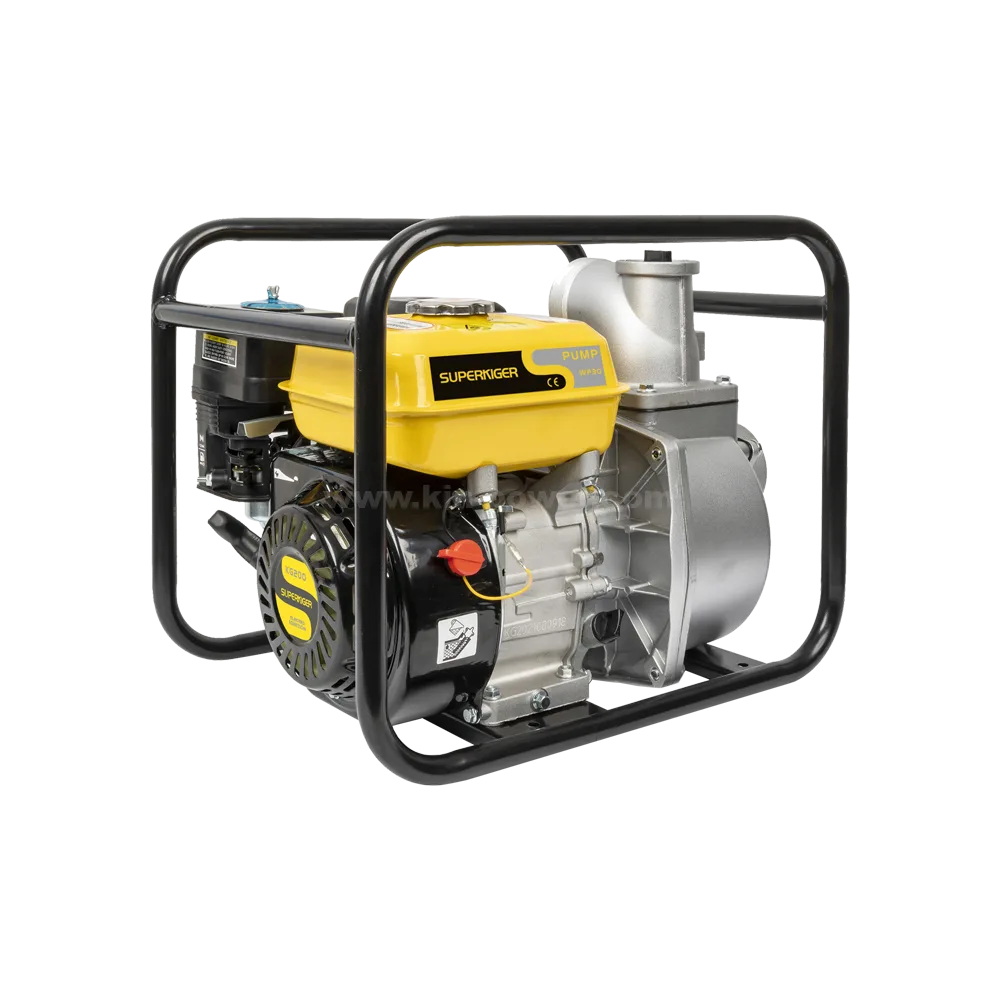
Gasoline water pumps are a cost-effective and convenient alternative to electric models. These water pumps are powered by generating sets, typically small four-stroke gasoline engines. Gasoline water pumps provide power for a variety of agricultural, construction and recreational activities.
Gasoline water pumps are widely used in a variety of applications, including agriculture, such as crop irrigation; construction, such as drainage, ditching and well drilling; and recreation, such as fishing and boating. Gasoline water pumps are often used in situations where electricity is not available, such as remote job sites. Some gasoline pumps, known as diaphragm pumps, can even handle the transfer of liquids containing larger particles and can also help filter out sediment and other debris.
When shopping for gasoline water pumps, there are several important factors to consider. First and foremost, it is important to consider a pump’s flow rate. This is an indication of the amount of liquid a pump is capable of handling. A good rule of thumb is to choose a pump that has a flow rate capable of producing the required impulse (pressure per unit of time).
It is also important to consider the size of the pump. This is determined by the distance the fluid must travel and the space available for the pump. Some pumps may require mounting brackets to support their size and weight, while other models can be wall-mounted or fit into tight spaces.
Once these details are determined, it is also important to consider the pump’s power requirements, which are typically expressed in horsepower (HP). Most models of gasoline water pumps use a four-stroke, small-displacement gasoline engine , and these engines generally range from 5.5 to 15 HP . For those looking to power their pump with an electric motor, it is important to consider the voltage and amperage of the motor.
In addition to the power and size of the pump, it is important to consider the durability of the model. It is best to choose a pump with a durable construction, made of corrosion-resistant material with a waterproof seal that can withstand the elements. In addition, modern gasoline pumps often come equipped with a variety of features, such as overload protection and temperature sensors, which can help maximize the life and performance of the pump.
Gasoline water pumps are a great, cost-effective alternative to electric models. By considering a pump’s flow rate, size, power requirements and longevity, anyone can find the perfect gasoline water pump for their needs and budget.
Related Engineering Guides & Product Catalog
- Diesel vs. Gasoline Generators for Commercial Backup: The Complete 2026 Buying Guide
- How to Size a Generator for Inductive Motor Loads (Pumps & Compressors)
- Explore KIGERPOWER Complete Power Machinery Catalog
Frequently Asked Questions (FAQ)
Q1: How do I calculate the required flow rate (m³/h or GPM) when selecting a gasoline water pump?
Divide the total water volume to be moved by the desired transfer time in hours. For example, draining a 60 m³ pool in 2 hours requires a pump rated at at least 30 m³/h (500 L/min). Always add a 20% safety margin to compensate for pipe friction, elevation changes, and elbow fittings.
Q2: How do suction lift and total head lift correlate with pump inlet/outlet diameter (2-inch vs 3-inch)?
Suction lift is the vertical distance from the water source to the pump (typically max 7–8 meters for self-priming centrifugal pumps). Total head is the vertical discharge elevation plus frictional resistance. A 2-inch pump typically delivers higher head (up to 28–32m) at moderate flow (~30 m³/h), whereas a 3-inch pump provides higher volume (~60 m³/h) at lower head. Choose 3-inch for rapid flat agricultural irrigation and 2-inch for higher elevation pumping.
Q3: Can a standard gasoline clear-water pump handle muddy or sandy water?
No. Standard clear-water pumps are designed for clean water containing particles smaller than 3mm. Pumping muddy or abrasive slurry will quickly erode the aluminum impeller and ruin the mechanical shaft seal. For liquids with leaves, gravel, or mud up to 20–25mm, specify a semi-trash or full-trash pump equipped with cast-iron impellers and silicon carbide seals.
Q4: What routine maintenance prevents water pump impeller seizure and seal failure?
Always prime the pump housing with clean water before every start—never run the pump dry, as the mechanical ceramic seal will burn out within 30 seconds. Flush the pump body with clean water after pumping agricultural chemicals or turbid water, drain water completely before winter freezing, and replace 4-stroke engine oil every 50 to 100 operating hours.